Almima, Tampa Mold Forecast - Today, Tomorrow and the Week Ahead

Mold Today

Low 12/100

Today (10 October) mold in Almima, Tampa is low; alternaria and cladosporium are low.

Mold Tomorrow

Low 12/100

Tomorrow (11 October 2026) levels are similar to today.

7-Day Trend

Over the next week alternaria and cladosporium will increase.

Updated: 11 October 2026 at 03:11 CEST
Country: United States

Explore Forecasts

Mold Forecast for Neighborhoods

78 neighborhoods in Tampa

Ad Mer Mold today Mold tomorrow Al Mar Mold today Mold tomorrow Albion Mold today Mold tomorrow Alice Heights Mold today Mold tomorrow Almima Mold today Mold tomorrow Alta Vista Mold today Mold tomorrow Altamira Heights Mold today Mold tomorrow Altamonte Heights Mold today Mold tomorrow Amelia Mold today Mold tomorrow Anderson-Frank House Mold today Mold tomorrow Andrea Mold today Mold tomorrow Armature Works Mold today Mold tomorrow Arturo Fuente Mold today Mold tomorrow Blanch Armwood Mold today Mold tomorrow Busch Gardens Tampa Mold today Mold tomorrow Busch Gardens Tampa Bay Mold today Mold tomorrow Channel District Mold today Mold tomorrow Clara C. Frye Mold today Mold tomorrow Cobra's Curse Mold today Mold tomorrow Cody Fowler Mold today Mold tomorrow Cyril (C.) Blythe Andrews Mold today Mold tomorrow Drew Park Mold today Mold tomorrow East Ybor Mold today Mold tomorrow Edward Daniel Davis Mold today Mold tomorrow El Centro Español de Tampa Mold today Mold tomorrow Elizabeth Dortsch Barnard Mold today Mold tomorrow Florida Museum of Photographic Arts Mold today Mold tomorrow Florida's First People - The Mound Builders Mold today Mold tomorrow Francisco (Frank) Scozzari Adamo Mold today Mold tomorrow Francisco Aristides Rodriquez, Junior Mold today Mold tomorrow Gasworthy Village Mold today Mold tomorrow Gavino Gutierrez Mold today Mold tomorrow Glazer Children's Museum Mold today Mold tomorrow Hampton Terrace Mold today Mold tomorrow Harbour Island Mold today Mold tomorrow Henry B. Plant Museum Mold today Mold tomorrow Hugh Campbell Macfarlane Mold today Mold tomorrow Hutchinson House Mold today Mold tomorrow Hyde Park Mold today Mold tomorrow Hyde Park Tampa Mold today Mold tomorrow Ignacio Haya Mold today Mold tomorrow Iron Gwazi Mold today Mold tomorrow James McKay, Senior Mold today Mold tomorrow Macfarlane Park Mold today Mold tomorrow Mack Ramsey Winton, M.D. Mold today Mold tomorrow McKay Bay Nature Park Mold today Mold tomorrow Meroba Hooker Crane Mold today Mold tomorrow Moses White Mold today Mold tomorrow Museum of Science & Industry Mold today Mold tomorrow Ossian Bingley Hart Mold today Mold tomorrow Palma Ceia Mold today Mold tomorrow Palma Ceia Spring Mold today Mold tomorrow Paulina Pedroso Mold today Mold tomorrow Peter Oliphant Knight Mold today Mold tomorrow Port Tampa Mold today Mold tomorrow Rattlesnake Mold today Mold tomorrow Ridgewood Park Mold today Mold tomorrow Riverbend Mold today Mold tomorrow Riverside Heights Mold today Mold tomorrow Riverwalk Tampa Mold today Mold tomorrow Science Discovery Center Mold today Mold tomorrow Seminole Heights Mold today Mold tomorrow South Seminole Heights Mold today Mold tomorrow Southeast Seminole Heights Mold today Mold tomorrow SS American Victory;American Victory Museum Mold today Mold tomorrow Stephen M. Sparkman Mold today Mold tomorrow Sulphur Springs Mold today Mold tomorrow Tampa Bay History Center Mold today Mold tomorrow Tampa Fire Fighters Museum Mold today Mold tomorrow Tampa Heights Mold today Mold tomorrow Tampa Museum of Art Mold today Mold tomorrow Tampa Riverwalk Mold today Mold tomorrow Vicente Martinez-Ybor Mold today Mold tomorrow Victoriano Mantiega Mold today Mold tomorrow Wellswood Mold today Mold tomorrow West Tampa Mold today Mold tomorrow Ybor City Mold today Mold tomorrow Ybor City Museum Mold today Mold tomorrow

Get More in Our App

Local pollen and air quality forecasts, interactive pollen maps and route profiles

Download on the App Store Get it on Google Play

Features and forecast availability vary by region.
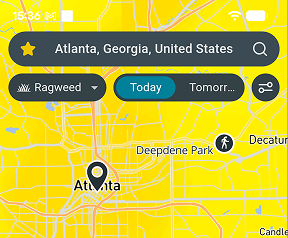
Airmine app pollen map

Mold Risk

Today - 10 October

Mold species Level Value
Alternaria
Low
11/100
Cladosporium
Low
12/100

Tomorrow - 11 October

Mold species Level Value 7-Day Trend
Alternaria
Low
11/100
Cladosporium
Low
12/100
ENVIRONMENT & ANALYSIS

Local Mold Conditions

Organic material for mold to grow on is plentiful around this part of Tampa, mainly in the woodland and the green spaces among the buildings. Under the trees, fallen oak leaves and decaying branches build up into a moist litter layer where mold thrives. Within the built-up area, mold finds food in compost heaps, mulched beds, grass clippings and leaves gathered along streets and gutters.

Most outdoor mold spores here are Cladosporium, which grows on the woodland litter through most of the year and is most plentiful in September, when temperatures average 27°C. Alternaria needs more warmth and is most abundant in September. Counts are lowest around January, when temperatures average about 15°C. Daily levels tend to climb through dry, windy afternoons and drop during prolonged rain.

Get pollen & AQ on Strava

Follow your environmental exposure and performance with the free Airmine-Strava integration. See your pollen and air quality exposure for every Strava activity.

Resource Hub

Pollen forecasts for Tampa Air quality for Tampa
Mold forecast neighborhoods 78 neighborhoods
Ad Mer
Mold today Mold tomorrow
Al Mar
Mold today Mold tomorrow
Albion
Mold today Mold tomorrow
Alice Heights
Mold today Mold tomorrow
Almima
Mold today Mold tomorrow
Sports venues in Tampa 5 sports venues

Frequently Asked Questions About Mold in Florida

Why do I still have allergy symptoms after the pollen season?

Allergy symptoms after the main pollen season may be caused by mold spores. Outdoor mold levels can remain high into late summer and autumn, when pollen levels are already falling. Mold allergy can cause symptoms similar to pollen allergy, including sneezing, a runny or blocked nose, itchy eyes, coughing, and wheezing.

What are mold spores and why do they cause allergies?

Mold spores are tiny particles released by fungi into the air. When inhaled, they can trigger an allergic reaction in sensitive people. Common symptoms include sneezing, a runny or blocked nose, itchy or watery eyes, coughing, and wheezing.

When are mold spore levels highest?

Outdoor mold spore levels often increase during warm and humid conditions, particularly when there is plenty of decaying vegetation. Levels can vary considerably with weather, season, vegetation, and location, and some types of mold are more common during particular times of the year, e.g. in the Fall.

How can I reduce my exposure to mold spores?

If you are sensitive to mold, check local mold spore levels and forecasts before spending long periods outdoors. On high-risk days, reducing time around dense vegetation, compost, fallen leaves, and other sources of decaying plant material may help limit exposure.

Understanding the Scale

The 0–100 mold scores represent risk levels, not direct mold measurements. Higher scores indicate higher risk.

Mold

None
0 No or negligible risk of exposure. Pollen/mold exposure is expected to be minimal.
Low
0-25 Low risk of exposure. Small amounts of pollen or mold spores may be present.
Moderate
25-50 Moderate risk of exposure. Pollen/mold exposure is expected to be noticeable.
High
50-75 High risk of exposure. Elevated pollen/mold exposure is expected.
Very High
75-100 Very high risk of exposure. Pollen/mold exposure is expected to be at or near its highest levels.

Get More in the Airmine Pollen app

Get 15-day pollen forecasts with morning, afternoon and evening detail, plus 5-day air quality forecasts. Explore interactive pollen risk maps, estimated pollen season start, route profiles and a symptoms diary.

Features and forecast availability vary by region. Currently covering Europe, the contiguous US, southern Canada, South Africa, Australia, Indonesia (Java & Bali), Brazil, Paraguay, Uruguay and the Buenos Aires area.

Developed with support from the European Space Agency (ESA) Business Applications and Space Solutions (BASS).
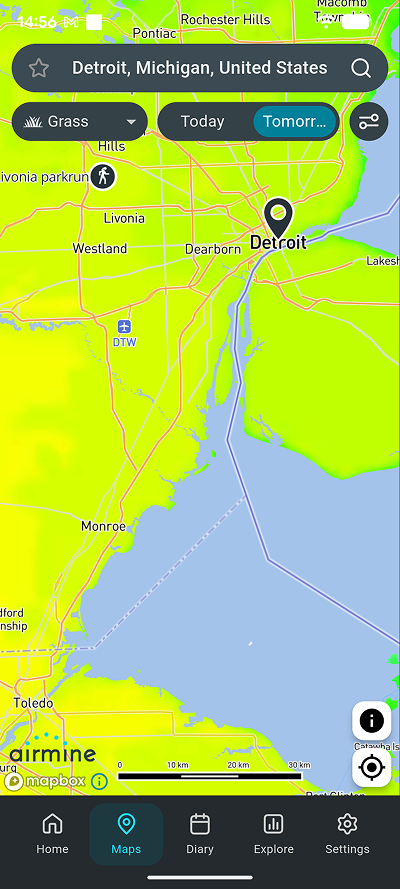
Airmine app pollen map

Airmine’s atmospheric monitoring platform was developed with support from the European Space Agency (ESA)’s Business Applications and Space Solutions (BASS) team, using satellite and Earth observation technologies to improve emissions monitoring. This page provides the latest mold spore forecast for Almima, Tampa.

Data provided by Airmine — Last update: 11 October 2026 at 03:11 CEST

Methodology & Technology

Airmine combines satellite observations, weather forecasts and machine learning to forecast pollen, air quality and mold risk. For pollen, vegetation maps and weather data help predict season onset and exposure at 400 × 400 metre resolution. For air quality, we refine Copernicus CAMS forecasts using local factors such as roads, emissions and terrain. For routes, data is updated dynamically to provide accurate exposure metrics along the specific race corridor coordinates.

Our models are calibrated against millions of professional monitoring records and updated four times daily as new data becomes available.

Unless stated otherwise, this content is Airmine’s sole responsibility and has not been paid for by external organisations.

Disclaimer

The information provided is for environmental awareness only and does not constitute medical advice. Athletes with known respiratory conditions or severe allergies should consult their physician before participating in strenuous outdoor activities based on these forecasts.

Some text on this page may be generated or summarised using artificial intelligence (AI). Wherever possible, AI-generated content is enriched with Airmine's proprietary data to improve its accuracy and relevance. However, AI-generated content may still contain errors, omissions, or inaccuracies.