Shinnecock Hills Golf Club – Championship Course, Southampton Air Quality Forecast - Today, Tomorrow
Air Quality Today
Today (10 October): Air quality in Shinnecock Hills Golf Club – Championship Course is good. AQI, PM2.5, PM10, NO2, O3, SO2, CO, HCHO, and PM1 are good. Pollution peaks around 11:00 AM (O3: 17.4/100).
Air Quality Tomorrow
Tomorrow (11 October 2026): Air quality in Shinnecock Hills Golf Club – Championship Course is good. All pollutants stay as today. Pollution peaks around 4:00 PM (NO2: 17.1/100).
Explore Forecasts
Get More in Our App
Local pollen and air quality forecasts, interactive pollen maps and route profiles


Features and forecast availability vary by region.
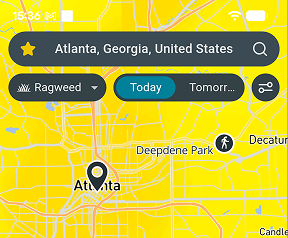
Air Quality
Today - 10 October
| Pollutant | Level | Value |
|---|---|---|
| AQI | Good | 17.4/100 |
| PM2.5 (fine particles) | Good | 8.4/100 |
| PM10 (coarse particles) | Good | 7.1/100 |
| NO2 (nitrogen dioxide) | Good | 15.2/100 |
| O3 (ozone) | Good | 17.4/100 |
| SO2 (sulfur dioxide) | Good | 0.6/100 |
| CO (carbon monoxide) | Good | 0.5/100 |
| HCHO (formaldehyde) | Good | 2.3/100 |
| PM1 (ultrafine particles) | Good | 5.3/100 |
Tomorrow - 11 October
| Pollutant | Level | Value |
|---|---|---|
| AQI | Good | 17.1/100 |
| PM2.5 (fine particles) | Good | 8.2/100 |
| PM10 (coarse particles) | Good | 6.7/100 |
| NO2 (nitrogen dioxide) | Good | 17.1/100 |
| O3 (ozone) | Good | 16.0/100 |
| SO2 (sulfur dioxide) | Good | 0.8/100 |
| CO (carbon monoxide) | Good | 0.4/100 |
| HCHO (formaldehyde) | Good | 2.7/100 |
| PM1 (ultrafine particles) | Good | 6.1/100 |
Local Environmental Conditions
Around this site in Southampton, traffic is light and there are few concentrated sources of air pollution. Its position by the Atlantic Ocean brings breezes that often clear pollutants away. Open grassland and scrub can produce smoke during grass fires and some dust in dry spells. Trees nearby help filter some particles from the air, though in hot weather they also emit compounds that feed ozone formation.
Summer sun from July to September cooks traffic fumes into ozone, especially in the warmest month, which averages 24°C. The cooler months, December to March, see more fine particles, as wood burning and traffic add emissions while frequent calm, cold mornings around 2°C keep pollution near the ground. Stronger winds around January, about 20 km/h on average, usually bring some of the cleanest air of the year.
Get pollen & AQ on Strava
Follow your environmental exposure and performance with the free Airmine-Strava integration. See your pollen and air quality exposure for every Strava activity.
Resource Hub
Frequently Asked Questions About Air Quality in New York
Is air quality bad in Shinnecock Hills Golf Club – Championship Course right now?
On 10 October 2026, overall air quality in Shinnecock Hills Golf Club – Championship Course is good. AQI is the main air quality indicator at 17.4/100. Pollution peaks around 11:00 AM (O3: 17.4/100).
Will air quality be worse tomorrow in Shinnecock Hills Golf Club – Championship Course?
On 11 October 2026, air quality conditions in Shinnecock Hills Golf Club – Championship Course will be similar to today, with AQI forecast at good at 17.1/100. Pollution peaks around 4:00 PM (NO2: 17.1/100).
When is air pollution at its worst in Shinnecock Hills Golf Club – Championship Course?
Summer sun from July to September cooks traffic fumes into ozone, especially in the warmest month, which averages 24°C. The cooler months, December to March, see more fine particles, as wood burning and traffic add emissions while frequent calm, cold mornings around 2°C keep pollution near the ground. Stronger winds around January, about 20 km/h on average, usually bring some of the cleanest air of the year.
Are air quality levels in Shinnecock Hills Golf Club – Championship Course based on measurements or forecasts?
It is forecasts derived by downscaling forecasts provided by EU’s Copernicus Atmosphere Monitoring Service (CAMS) by taking into account local conditions such as traffic patterns. CAMS bases its forecast on satellite measurements of particles and chemical compounds in the atmosphere. Airmine’s services were developed with support from the European Space Agency (ESA)’s Business Applications and Space Solutions (BASS) team.
Why doesn’t the forecast always reflect wildfire impacts?
Airmine’s forecast uses CAMS (Copernicus Atmosphere Monitoring Service) as its background atmospheric model. While CAMS includes wildfire emissions, these are derived from satellite observations and are not available in real time. During rapidly evolving wildfire events, there may therefore be a delay before increased emissions are incorporated into the model. As a result, the forecast may temporarily underestimate PM₂.₅ and other pollutants associated with wildfire smoke.
During rapidly evolving wildfire events, CAMS may lag by approximately 1–2 days before increased wildfire emissions are fully represented, which can lead to temporary underestimation of PM₂.₅ concentrations in Airmine’s forecast.
Understanding the Scale
The 0–100 air quality scores represent risk levels, not direct air pollutant concentrations. Higher scores indicate higher risk.
Air Quality
| Good | 0-20 | Low air quality risk. Air quality is expected to be good, with low levels of pollution. |
| Fair | 20-40 | Generally low air quality risk. Air quality is expected to be acceptable, with some pollution present. |
| Moderate | 40-60 | Moderate air quality risk. Air pollution is elevated and air quality may be less favorable. |
| Poor | 60-80 | High air quality risk. Air pollution is high and air quality is expected to be poor. |
| Very Poor | 80-100 | Very high air quality risk. Air pollution is very high and air quality is expected to be very poor. |